Research Peptide Blog Database
Peer-reviewed studies, clinical data, mechanism breakdowns, and molecular specifications — all in one place.
Body Protection Compound · Pentadecapeptide
BPC-157
Pentadecapeptide for tissue repair research.
Published Scientific Research
Peer-reviewed studies investigating BPC-157 sourced from PubMed-indexed journals for educational reference only.
Gastric pentadecapeptide body protection compound BPC 157 and its role in accelerating musculoskeletal soft tissue healing.
There is a current need for a therapy that can alleviate the social and economic burden that presents itself with debilitating and recurring musculoskeletal soft tissue injuries and disorders. Currently, several therapies are emerging and...
View Full Study on PubMed →The promoting effect of pentadecapeptide BPC 157 on tendon healing involves tendon outgrowth, cell survival, and cell migration.
Pentadecapeptide BPC 157, composed of 15 amino acids, is a partial sequence of body protection compound (BPC) that is discovered in and isolated from human gastric juice. Experimentally it has been demonstrated to accelerate the...
View Full Study on PubMed →BPC 157 and Standard Angiogenic Growth Factors. Gastrointestinal Tract Healing, Lessons from Tendon, Ligament, Muscle and Bone Healing.
Commonly, the angiogenic growth factors signify healing. However, gastrointestinal ulceration is still poorly understood particularly with respect to a general pharmacological/pathophysiological role of various angiogenic growth factors implemented in growth factors wound healing concept. Thereby,...
View Full Study on PubMed →Therapeutic Peptides in Orthopaedics: Applications, Challenges, and Future Directions.
Therapeutic peptides are emerging as promising adjuncts in the management of orthopaedic injuries, grounded in their ability to modulate molecular signaling networks central to cellular medicine. By acting on key pathways such as PI3K/Akt, mTOR,...
View Full Study on PubMed →BPC 157 and blood vessels.
This review focuses on the described effects of BPC 157 on blood vessels after different types of damage, and elucidate by investigating different aspects of vascular response to injury (endothelium damage, clotting, thrombosis, vasoconstriction, vasodilatation,...
View Full Study on PubMed →Stable gastric pentadecapeptide BPC 157-NO-system relation.
We reviewed stable gastric pentadecapeptide BPC 157-NO-system-relation, its close participation in Moncada's (maintained vascular integrity, platelets control) homeostatic healing response of NO-system to injury. Namely, BPC 157's particular healing effect also affects all events after...
View Full Study on PubMed →Novel Cytoprotective Mediator, Stable Gastric Pentadecapeptide BPC 157. Vascular Recruitment and Gastrointestinal Tract Healing.
Years ago, we revealed a novel cytoprotective mediator, stable gastric pentadecapeptide BPC 157, particular anti-ulcer peptide that heals different organs lesions when given as a therapy, native in human gastric juice while maintaining GI-tract mucosal...
View Full Study on PubMed →BPC 157's effect on healing.
The 15 amino acid agent BPC 157, showing a wide range of organoprotective action in different experimental models, was used in our experiments in order to establish its influence on different elements connected with the...
View Full Study on PubMed →Technical Specifications
🔬 Molecular Profile
🧊 Storage Requirements
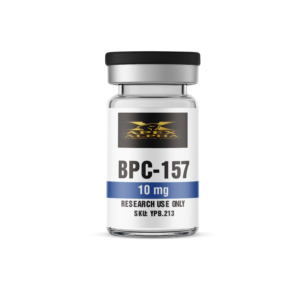
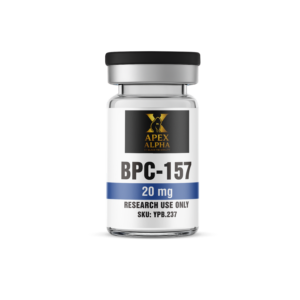
Research-Grade BPC-157
≥98% purity, third-party COA verified, lyophilized for stability. For in vitro laboratory research use only.
⚠️ Important Research Notice
All compounds listed are intended exclusively for in vitro laboratory research by qualified professionals. Not for human or animal consumption. Not approved by the FDA for any diagnostic, therapeutic, or clinical purpose. All research findings are sourced from peer-reviewed journals for educational reference only. Not to be interpreted as medical advice or product claims.