
Research Peptide Blog Database
Peer-reviewed studies, clinical data, mechanism breakdowns, and molecular specifications — all in one place.
Master Antioxidant Tripeptide · GSH
Glutathione
Antioxidant tripeptide. For in vitro research use only.
Published Scientific Research
Peer-reviewed studies investigating Glutathione sourced from PubMed-indexed journals for educational reference only.
The antioxidant glutathione.
Reduced glutathione (GSH) is an essential non-enzymatic antioxidant in mammalian cells. GSH can act directly as an antioxidant to protect cells against free radicals and pro-oxidants, and as a cofactor for antioxidant and detoxification enzymes...
View Full Study on PubMed →An Update on Glutathione's Biosynthesis, Metabolism, Functions, and Medicinal Purposes.
Glutathione (GSH) has been the focus of increased scientific interest in the last decades. It plays a crucial role in all major physiological processes by supplying antioxidant defenses through participating in cellular redox reactions in...
View Full Study on PubMed →Cysteine Regulates Oxidative Stress and Glutathione-Related Antioxidative Capacity before and after Colorectal Tumor Resection.
Cysteine might scavenge free radicals and is a limiting substrate for the cellular synthesis of glutathione (GSH). We investigated the association of cysteine with oxidative stress and GSH-related antioxidant capacity in colorectal cancer (CRC) patients....
View Full Study on PubMed →Oxidative Stress and Antioxidant Defense in the Brain of Bat Species with Different Feeding Habits.
Assessing the levels of oxidative stress markers and antioxidant enzymes in the brain is crucial in evaluating its antioxidant capacity and understanding the influence of various dietary patterns on brain well-being. This study aimed to...
View Full Study on PubMed →Evaluation of antioxidant enzyme levels, oxidative stress markers and serum prolidase activity in testicular cancer.
Testicular cancer is a significant malignancy affecting males, and understanding the underlying biochemical changes associated with the disease is essential for improved management and treatment strategies. Prolidase enzyme, has been implicated in various disease processes....
View Full Study on PubMed →Chemical Characterization, Antioxidant Capacity and Anti-Oxidative Stress Potential of South American Fabaceae Desmodium tortuosum.
It has been proposed that oxidative stress is a pathogenic mechanism to induce cytotoxicity and to cause cardiovascular and neuronal diseases. At present, natural compounds such as plant extracts have been used to reduce the...
View Full Study on PubMed →Glutathione and glutathione-dependent enzymes represent a co-ordinately regulated defence against oxidative stress.
Increases in the intracellular levels of reactive oxygen species (ROS), frequently referred to as oxidative stress, represents a potentially toxic insult which if not counteracted will lead to membrane dysfunction, DNA damage and inactivation of...
View Full Study on PubMed →Glutathione is a key player in metal-induced oxidative stress defenses.
Since the industrial revolution, the production, and consequently the emission of metals, has increased exponentially, overwhelming the natural cycles of metals in many ecosystems. Metals display a diverse array of physico-chemical properties such as essential...
View Full Study on PubMed →Technical Specifications
🔬 Molecular Profile
🧊 Storage Requirements
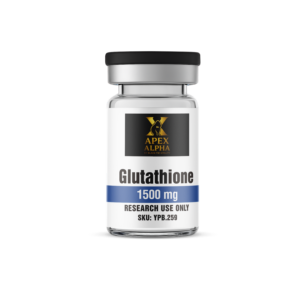
Research-Grade Glutathione
≥98% purity, third-party COA verified, lyophilized for stability. For in vitro laboratory research use only.
⚠️ Important Research Notice
All compounds listed are intended exclusively for in vitro laboratory research by qualified professionals. Not for human or animal consumption. Not approved by the FDA for any diagnostic, therapeutic, or clinical purpose. All research findings are sourced from peer-reviewed journals for educational reference only. Not to be interpreted as medical advice or product claims.