
Research Peptide Blog Database
Peer-reviewed studies, clinical data, mechanism breakdowns, and molecular specifications — all in one place.
KISS1 Neuropeptide · HPG Axis Regulator
Kisspeptin
HPG axis regulator. For in vitro research use only.
Published Scientific Research
Peer-reviewed studies investigating Kisspeptin sourced from PubMed-indexed journals for educational reference only.
The Role of Kisspeptin in the Control of the Hypothalamic-Pituitary-Gonadal Axis and Reproduction.
The discovery of kisspeptin as a critical central regulatory factor of GnRH release has given people a novel understanding of the neuroendocrine regulation in human reproduction. Kisspeptin activates the signaling pathway by binding to its...
View Full Study on PubMed →Normal Puberty.
Puberty is characterized by gonadarche and adrenarche. Gonadarche represents the reactivation of the hypothalamic-pituitary-gonadal axis with increased gonadotropin-releasing hormone, luteinizing hormone, and follicle-stimulating hormone secretion following the quiescence during childhood. Pubarche is the development of...
View Full Study on PubMed →Pubertal development and regulation.
Puberty marks the end of childhood and is a period when individuals undergo physiological and psychological changes to achieve sexual maturation and fertility. The hypothalamic-pituitary-gonadal axis controls puberty and reproduction and is tightly regulated by...
View Full Study on PubMed →Hypothalamo-Pituitary axis and puberty.
Puberty is a complex process that culminates in the acquisition of psychophysical maturity and reproductive capacity. This elaborate and fascinating process marks the end of childhood. Behind it lies a complex, genetically mediated neuroendocrine mechanism...
View Full Study on PubMed →The hypothalamus-pituitary-gonad axis: Tales of mice and men.
Reproduction is controlled by the hypothalamic-pituitary-gonadal (HPG) axis. Gonadotropin-releasing hormone (GnRH) neurons play a central role in this axis through production of GnRH, which binds to a membrane receptor on pituitary gonadotrophs and stimulates the...
View Full Study on PubMed →Sex differences in circadian timing systems: implications for disease.
Virtually every eukaryotic cell has an endogenous circadian clock and a biological sex. These cell-based clocks have been conceptualized as oscillators whose phase can be reset by internal signals such as hormones, and external cues...
View Full Study on PubMed →Kisspeptin and neurokinin B: roles in reproductive health.
Kisspeptin and neurokinin B (NKB) play a key role in several physiological processes including in puberty, adult reproductive function including the menstrual cycle, as well as mediating the symptoms of menopause. Infundibular kisspeptin neurons, which...
View Full Study on PubMed →Urinary phthalate/DINCH metabolites associations with kisspeptin and reproductive hormones in teenagers: A cross-sectional study from the HBM4EU aligned studies.
Exposure to phthalate/DINCH metabolites can induce human reproductive toxicity, however, their endocrine-disrupting mechanisms are not fully elucidated.
View Full Study on PubMed →Technical Specifications
🔬 Molecular Profile
🧊 Storage Requirements
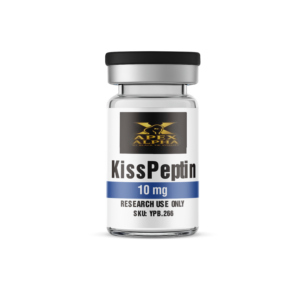
Research-Grade Kisspeptin
≥98% purity, third-party COA verified, lyophilized for stability. For in vitro laboratory research use only.
⚠️ Important Research Notice
All compounds listed are intended exclusively for in vitro laboratory research by qualified professionals. Not for human or animal consumption. Not approved by the FDA for any diagnostic, therapeutic, or clinical purpose. All research findings are sourced from peer-reviewed journals for educational reference only. Not to be interpreted as medical advice or product claims.