
Research Peptide Blog Database
Peer-reviewed studies, clinical data, mechanism breakdowns, and molecular specifications — all in one place.
Thymosin Beta-4 · Actin-Sequestering Peptide
TB-500
Thymosin Beta-4 for wound healing research.
Published Scientific Research
Peer-reviewed studies investigating TB-500 sourced from PubMed-indexed journals for educational reference only.
Thymosin beta-4 participate in antibacterial immunity and wound healing in black tiger shrimp, Penaeus monodon.
Thymosin beta-4 (Tβ4) is a ubiquitous protein with multiple and diverse intracellular and extracellular functions in vertebrates, which play fundamental roles in innate immune against pathogens and wound healing. In this study, the full-length cDNA...
View Full Study on PubMed →beta-Thymosins.
The development of thymosin beta(4) from a thymic hormone to an actin-sequestering peptide and back to a cytokine supporting wound healing will be outlined. Thymosin fraction 5 consists of a mixture of polypeptides and improves...
View Full Study on PubMed →Thymosin beta 4: A novel corneal wound healing and anti-inflammatory agent.
Thymosin beta 4 (Tbeta(4)) is a low molecular weight protein present in all cells except erythrocytes. Although Tbeta(4) is the major monomeric actin-sequestering peptide in cells and can depolymerize F-actin, evidence is mounting to support...
View Full Study on PubMed →Thymosin beta 4 promotes corneal wound healing and decreases inflammation in vivo following alkali injury.
Previously, thymosin beta 4 (Tbeta(4)) was found to promote wound healing in full thickness skin wounds and heptanol debrided corneas. Here, the effect of Tbeta(4) was examined treatment on corneal wound healing and inflammation in...
View Full Study on PubMed →Thymosin beta 4 and the eye: the journey from bench to bedside.
Thymosin beta 4 (Tβ4) has important applications in ocular repair and Phase 3 clinical trials using Tβ4 to treat dry eye and neurotrophic keratopathy are currently ongoing. These exciting clinical possibilities for Tβ4 in the...
View Full Study on PubMed →Thymosin beta-4 - A potential tool in healing middle ear lesions in adult mammals.
Acute tympanic membrane perforations primarily occur due to injury or infection in humans. In acute cases, nearly 80-94 % of the perforations heal spontaneously. In chronic cases, non-surgical treatment becomes significantly limited, and the perforation...
View Full Study on PubMed →Thymosin beta 4: A potential novel adjunct treatment for bacterial keratitis.
Microbial keratitis is a rapidly progressing, visually debilitating infection of the cornea that can lead to corneal scarring, endophthalmitis, and perforation. Corneal opacification or scarring, a complication of keratitis, is among the leading causes of...
View Full Study on PubMed →Thymosin Beta 4 Is a Potential Regulator of Hepatic Stellate Cells.
Liver fibrosis, a major characteristic of chronic liver disease, is inappropriate tissue remodeling caused by prolonged parenchymal cell injury and inflammation. During liver injury, hepatic stellate cells (HSCs) undergo transdifferentiation from quiescent HSCs into activated...
View Full Study on PubMed →Technical Specifications
🔬 Molecular Profile
🧊 Storage Requirements
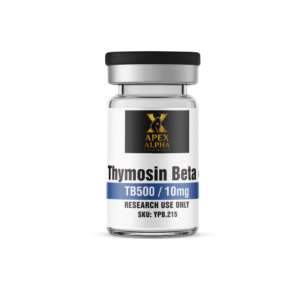
Research-Grade TB-500
≥98% purity, third-party COA verified, lyophilized for stability. For in vitro laboratory research use only.
⚠️ Important Research Notice
All compounds listed are intended exclusively for in vitro laboratory research by qualified professionals. Not for human or animal consumption. Not approved by the FDA for any diagnostic, therapeutic, or clinical purpose. All research findings are sourced from peer-reviewed journals for educational reference only. Not to be interpreted as medical advice or product claims.